Child-Friendly Interiors – Safe, Stylish, and Practical Home Design for Families
Every family dreams of a home that is not only beautiful but also safe, welcoming, and functional for children. Designing child-friendly interiors requires a thoughtful balance between style, safety, and practicality. From baby-proofing living rooms to creating playful study areas for older kids, child-focused design helps families enjoy peace of mind while ensuring kids grow in a nurturing environment.
Unlike regular interiors, child-friendly interiors pay special attention to details like rounded furniture edges, safe flooring, non-toxic paints, and clutter-free storage. These homes are designed to support children at different stages of growth, adapting to their changing needs.
Table of Contents
Looking to design safe and playful interiors for your kids?
Connect with InteriorGrid.com today.
Why Child-Friendly Interiors Matter
Children are naturally curious, playful, and active. A home that isn’t designed with them in mind can quickly become unsafe or uncomfortable. With sharp corners, slippery floors, toxic finishes, or cluttered spaces, accidents are bound to happen. Child-friendly interiors ensure safety without compromising on style.
Parents also benefit because a thoughtfully designed child-friendly home reduces stress, minimizes clutter, and supports positive habits like organization and creativity.
Safety First: Designing Child-Proof Homes
Safety is the foundation of child-friendly interiors. Parents need to anticipate accidents before they happen and eliminate risk points.
Some safety tips include:
- Ensuring a child-friendly home requires careful attention to safety features, particularly in areas where children spend most of their time. One effective measure is using furniture with rounded edges instead of sharp corners. Rounded furniture minimizes the risk of injuries from accidental bumps, which are common in active children’s rooms or living areas. Sofas, coffee tables, and beds with smooth, curved edges help create a safer environment without compromising on style.
- In addition to furniture, flooring plays a crucial role in child safety. Non-slip rugs provide traction, preventing slips and falls, especially in high-traffic areas like living rooms, play zones, and hallways. Using soft flooring materials such as vinyl or cork can further reduce the impact if a child does fall, offering both comfort and safety. These materials are also easy to clean, making them practical for homes with young children.
- Safety locks on kitchen cabinets and drawers are essential to prevent access to potentially dangerous items such as knives, cleaning agents, or small appliances. Installing child-proof locks ensures that curious hands cannot open cabinets or drawers, keeping hazardous items securely out of reach.
- Windows and balconies are other areas of concern. Window grills add a physical barrier that prevents accidental falls, while child-proof balcony railings ensure children cannot climb or squeeze through gaps. It’s important to choose railings and grills that are sturdy and meet safety standards, providing peace of mind for parents.
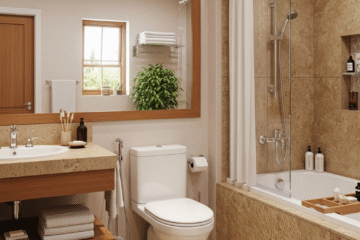
- Bathrooms, with their slippery surfaces, require anti-skid tiles to prevent accidents. These tiles provide better grip for wet feet, reducing the chances of slips in showers or near bathtubs. Additionally, installing cordless blinds or ensuring cords are tied up and out of reach eliminates entanglement hazards, making window coverings safe for children.
- By integrating these features, parents can create a safe and secure home environment where children can explore, play, and grow without unnecessary risks. Thoughtful design choices that prioritize safety not only protect children but also provide parents with reassurance and peace of mind.
When safety is seamlessly integrated into design, children can move freely, and parents enjoy peace of mind.
Playful and Creative Design
While safety is important, child-friendly interiors should also be inspiring. A child’s surroundings influence creativity, imagination, and learning. Colors, textures, and layouts play a big role in shaping mood and behavior.
Playful Design Ideas:
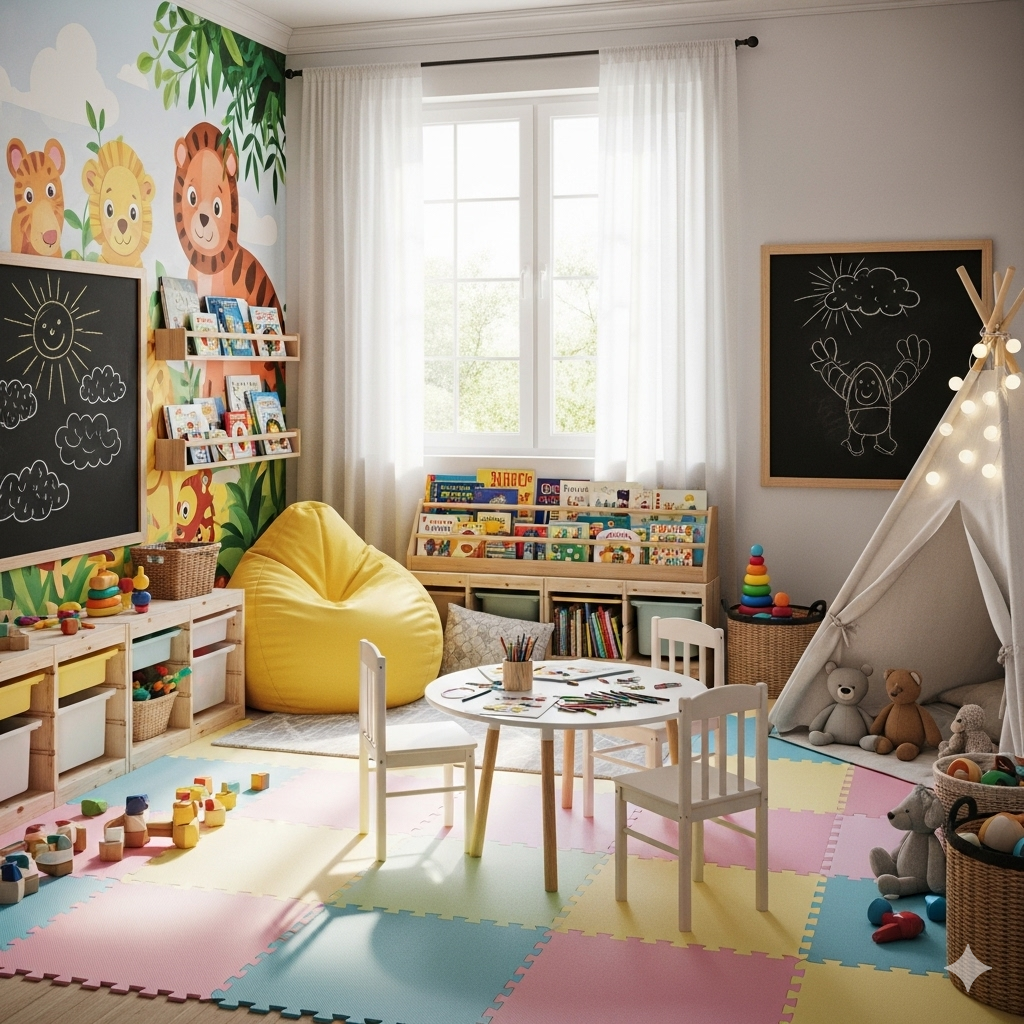
- Designing a dynamic and engaging kids’ room involves creating spaces that are not only visually appealing but also interactive and adaptable as children grow. One effective approach is incorporating accent walls using chalkboard or whiteboard paint. These walls serve as functional canvases where children can draw, write, and express their creativity freely. Unlike traditional painted walls, these interactive surfaces encourage learning, art, and play, turning a simple wall into a multi-purpose creative space.
- Interactive wall decals are another versatile solution for kids’ rooms. These decals can feature educational themes like alphabets, numbers, maps, or fun characters, and many are removable or repositionable. This flexibility allows parents to update the décor as their child’s interests evolve, keeping the room relevant and exciting over time. It also provides an easy way to introduce seasonal or thematic changes without major renovation work.
- Vibrant furniture in fun shapes and bright colors adds a playful element while making the room more inviting. Modular storage units, small chairs shaped like animals, and beds designed as cars or castles not only stimulate imagination but also make daily routines more enjoyable. Using color strategically can define different zones within the room, such as study, sleep, and play areas, while maintaining a cohesive, cheerful aesthetic.
- Indoor play corners are an excellent addition for promoting physical activity and independent play within a safe environment. Incorporating elements like small play tents, indoor swings, soft play mats, or climbing structures creates a designated area for children to explore, exercise, and interact with toys and peers. These spaces encourage active play, improve motor skills, and provide a controlled environment where parents can supervise safely.
- Themed bedrooms are particularly effective in sparking imagination and engagement. Spaces designed around themes like outer space, jungles, princess castles, or racing cars transform ordinary rooms into adventure zones where children can immerse themselves in storytelling and role-play. Themes can be reinforced through bedding, furniture, décor accessories, and wall art, creating a cohesive and inspiring environment.
- By combining accent walls, interactive decals, vibrant furniture, indoor play zones, and themed décor, a child’s room becomes more than just a place to sleep—it transforms into a stimulating environment that nurtures creativity, learning, and joyful exploration. Thoughtful design choices in these areas help children develop their personalities, skills, and independence in a safe and fun space.
Explore custom design solutions for child-friendly interiors at InteriorGrid.com.
Smart Storage Solutions
One of the biggest challenges in family homes is clutter. Children accumulate toys, books, clothes, and school supplies that need organized storage. Child-friendly interiors integrate storage into furniture and room design.
Ideas include:
- Creating Child-Friendly Interiors is essential for families who want their children to enjoy safe, organized, and stimulating environments. Thoughtful Child-Friendly Interiors combine safety, functionality, and style, allowing kids to play, learn, and grow independently. Implementing innovative Child-Friendly Interiors strategies ensures every corner is both practical and engaging for children.
- Toy Boxes with Soft-Close Lids
- A key feature in Child-Friendly Interiors is toy boxes with soft-close lids. These prevent accidental finger injuries while keeping play areas tidy. According to expert Child-Friendly Interiors recommendations, soft-close lids provide both safety and convenience, making it easy for children to access toys without supervision. Integrating toy boxes into Child-Friendly Interiors ensures playtime remains safe and enjoyable.
- Low-Height Shelves
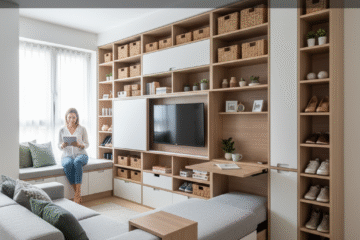
- Low-height shelves are another essential element in Child-Friendly Interiors. They allow children to organize books, toys, and personal items independently. By incorporating low shelves in Child-Friendly Interiors, designers encourage responsibility and autonomy while maintaining a clutter-free space. Modern Child-Friendly Interiors emphasize accessibility, making storage easy to reach and safe for everyday use.
- Under-Bed Storage Drawers
- Under-bed storage drawers are a smart solution in practical Child-Friendly Interiors. They provide extra space for seasonal clothes, bedding, or toys, keeping rooms organized. Following effective Child-Friendly Interiors principles, under-bed drawers utilize otherwise wasted space while remaining child-accessible. These drawers, integrated as part of Child-Friendly Interiors, maximize storage without compromising play or walking areas.
- Multi-Purpose Furniture
- Multi-purpose furniture, such as bunk beds with storage ladders, plays a pivotal role in modern Child-Friendly Interiors. This type of furniture combines sleep, storage, and play solutions in one piece, making rooms efficient and fun. By including multi-functional furniture in Child-Friendly Interiors, designers create adaptable spaces that grow with the child, following expert Child-Friendly Interiors guidelines.
- Wall-Mounted Cubbies for Books and Art Supplies
- Wall-mounted cubbies are an innovative feature in effective Child-Friendly Interiors. They provide accessible storage for books, art supplies, and learning materials without taking up floor space. Using wall-mounted cubbies in Child-Friendly Interiors ensures that items are organized, visible, and easy for children to reach. Modern Child-Friendly Interiors highlight vertical storage solutions as a practical way to maintain tidy and engaging rooms.
- Benefits of Implementing Child-Friendly Interiors
- Ensures Safety: Soft-close toy boxes and low-height shelves in Child-Friendly Interiors reduce the risk of accidents.
- Promotes Independence: Accessible storage solutions in Child-Friendly Interiors encourage children to manage their belongings.
- Maximizes Space: Multi-purpose furniture and under-bed storage in Child-Friendly Interiors optimize usable room area.
- Supports Organization: Wall-mounted cubbies and smart shelving in Child-Friendly Interiors maintain a clean and structured environment.
- Enhances Play and Learning: Thoughtfully designed Child-Friendly Interiors combine functionality with engaging spaces for creativity.
- How Child-Friendly Interiors Transform Spaces
- Incorporating Child-Friendly Interiors strategies ensures that children have safe, practical, and stimulating environments. From soft-close toy boxes and low-height shelves to under-bed storage, multi-purpose furniture, and wall-mounted cubbies, well-designed Child-Friendly Interiors allow children to play, learn, and organize independently. Implementing Child-Friendly Interiors creates rooms that are not only aesthetically pleasing but also functional, adaptable, and safe for growing kids.
By teaching kids to store and manage their belongings, homes stay neat, and children learn responsibility.
Child-Friendly Materials and Finishes
Material selection is crucial for child-friendly interiors. Families should prioritize durability, easy maintenance, and non-toxic finishes.
Best Material Choices:
- When designing interiors for families, selecting the right materials is key to creating spaces that are safe, durable, and easy to maintain. Using washable wall paints and wallpapers, scratch-resistant laminates, soft rugs, padded furniture, and eco-friendly paints ensures longevity, safety, and comfort for children while maintaining aesthetic appeal.
- Washable Wall Paints and Wallpapers
- Washable wall paints and wallpapers are essential in family-friendly interiors. They allow easy cleaning of fingerprints, spills, and stains, keeping rooms looking fresh. Using washable finishes in children’s rooms reduces maintenance efforts and prevents damage over time. Integrating washable wall paints and wallpapers into interior design ensures vibrant walls remain intact, supporting a playful and practical environment for kids.
- Scratch-Resistant Laminates for Furniture
- Furniture in family homes experiences high usage, so scratch-resistant laminates are a must. These laminates protect tables, shelves, and cabinets from daily wear and tear while maintaining a polished look. Incorporating scratch-resistant laminates for furniture ensures durability without sacrificing style, making it easier to maintain clean, safe, and long-lasting interiors.
- Soft Rugs and Carpets with Stain Resistance
- Soft rugs and carpets provide comfort for children while adding warmth and style to a room. Choosing options with stain resistance ensures spills and accidents are easily cleaned without leaving permanent marks. Incorporating soft rugs and carpets with stain resistance creates safe, comfortable play areas while maintaining visual appeal and hygiene in children’s spaces.
- Padded Headboards and Seating
- Padded headboards and seating areas enhance safety in family-focused interiors. Soft surfaces reduce the risk of injuries from accidental bumps while adding comfort and style. Including padded headboards and seating in bedrooms or living areas ensures functional, kid-friendly design that balances aesthetics with safety.
- Eco-Friendly and Non-Toxic Paints for Children’s Rooms
- Safety is paramount in children’s spaces, making eco-friendly and non-toxic paints essential. These paints reduce exposure to harmful chemicals, creating a healthier environment for kids. Using eco-friendly and non-toxic paints for children’s rooms aligns with sustainable design principles while ensuring a safe, comfortable, and visually appealing space.
- Benefits of Using Child-Safe and Durable Materials
- Easy Maintenance: Washable wall paints and scratch-resistant laminates simplify cleaning.
- Enhanced Safety: Padded surfaces and non-toxic paints minimize risks to children.
- Durability: Scratch-resistant laminates and stain-resistant rugs extend the lifespan of interiors.
- Comfort: Soft rugs and padded furniture create cozy, functional spaces for kids.
- Eco-Conscious Design: Non-toxic paints ensure sustainable and safe environments.
- How Child-Safe Materials Transform Interiors
- Incorporating washable wall paints and wallpapers, scratch-resistant laminates, soft rugs, padded furniture, and eco-friendly paints transforms homes into family-friendly spaces that are both stylish and practical. These materials make interiors easier to maintain, safer for children, and durable for long-term use, while supporting creativity and comfort in kids’ rooms.
Durable materials save money long-term and ensure that interiors remain beautiful despite rough use by kids.
Kids’ Bedrooms and Study Spaces
A child’s bedroom is their personal world. Designing it with care ensures comfort, creativity, and productivity.
Bedroom & Study Ideas:
- When designing interiors for families, selecting the right materials is critical for creating spaces that are safe, durable, and easy to maintain. Thoughtful material choices ensure that rooms remain visually appealing while standing up to the wear and tear of everyday life. Using washable wall paints and wallpapers, scratch-resistant laminates, soft rugs, padded furniture, and eco-friendly paints guarantees longevity, safety, and comfort for children, all while maintaining aesthetic appeal in your home.
- Washable Wall Paints and Wallpapers
- Washable wall paints and wallpapers are a cornerstone of family-friendly interiors. Children’s rooms often experience fingerprints, spills, and scuff marks, and washable finishes allow for easy cleaning without damaging the walls. Incorporating washable wall paints and wallpapers ensures that rooms look vibrant and fresh over time. In modern family-focused design, these finishes support a practical, playful, and maintenance-friendly environment for kids, combining functionality with style.
- Scratch-Resistant Laminates for Furniture
- High-traffic areas and frequently used furniture require durability. Scratch-resistant laminates for furniture protect tables, cabinets, and shelves from daily wear and tear, preserving their polished appearance. Integrating scratch-resistant laminates for furniture ensures interiors remain clean, safe, and long-lasting without compromising on design. This material choice is especially valuable in children’s rooms, playrooms, and family living areas.
- Soft Rugs and Carpets with Stain Resistance
- Soft, cushioned rugs and carpets add warmth and comfort to children’s spaces while providing a safe surface for play. Selecting soft rugs and carpets with stain resistance allows easy cleaning of spills and accidents, keeping the room hygienic and visually appealing. By using soft rugs and carpets with stain resistance, designers can create inviting, functional spaces that combine style, comfort, and safety.
- Padded Headboards and Seating
- Padded headboards and seating are an excellent choice for child-safe interiors. Soft, cushioned surfaces reduce the risk of injuries from accidental bumps and add a cozy touch to bedrooms or living areas. Including padded headboards and seating in your design strategy ensures that interiors are both functional and child-friendly, balancing safety with style.
- Eco-Friendly and Non-Toxic Paints for Children’s Rooms
- Safety is paramount in children’s spaces. Eco-friendly and non-toxic paints for children’s rooms minimize exposure to harmful chemicals, promoting a healthier indoor environment. Integrating eco-friendly and non-toxic paints aligns with sustainable design principles while providing vibrant, safe, and visually appealing rooms for kids. This choice ensures peace of mind for parents while supporting environmentally conscious living.
- Benefits of Child-Safe and Durable Materials
- Easy Maintenance: Washable wall paints and scratch-resistant laminates simplify cleaning and upkeep.
- Enhanced Safety: Padded surfaces and non-toxic paints minimize risks for children.
- Durability: Scratch-resistant laminates and stain-resistant rugs ensure long-lasting interiors.
- Comfort: Soft rugs and padded furniture create cozy, functional spaces for kids.
- Eco-Conscious Design: Non-toxic paints support sustainable and safe environments.
- How Child-Safe Materials Transform Interiors
- Incorporating washable wall paints and wallpapers, scratch-resistant laminates, soft rugs, padded furniture, and eco-friendly paints transforms homes into family-friendly spaces that are both practical and stylish. These materials make interiors easier to maintain, safer for children, and durable for long-term use while supporting creativity, comfort, and independence in kids’ rooms. By choosing the right materials, designers can create spaces that are functional, safe, and aesthetically pleasing for the entire family.
These spaces should be flexible, adapting as children grow from toddlers to teenagers.
Family Living Rooms and Shared Spaces
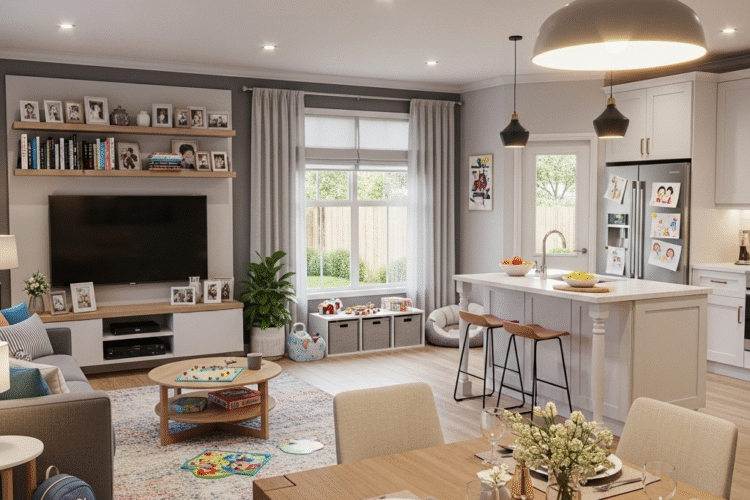
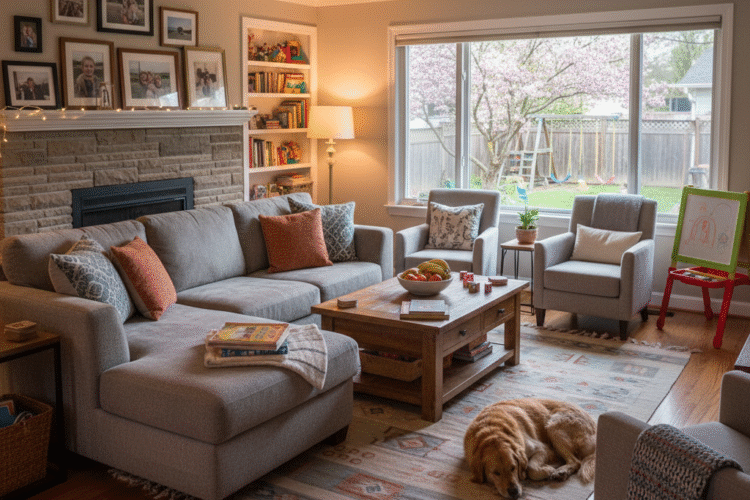
In homes with children, living rooms double as play areas, family gathering zones, and entertainment hubs. Designing child-friendly interiors for living rooms means blending comfort with safety.
Tips for Family Living Rooms:
- Sturdy sofas with washable covers
- Storage ottomans for toys and blankets
- Low-height coffee tables with rounded corners
- Rugs for playtime and safe crawling
- Easy-to-clean wall finishes to handle stains and doodles
This makes living rooms stress-free while remaining stylish for guests.
Bathrooms and Child Safety
Bathrooms can be slippery and hazardous for children. Some must-have child-friendly solutions include:
- Step stools for sinks
- Anti-skid mats and tiles
- Temperature regulators in showers to avoid burns
- Low-height storage racks for toiletries
- Handrails for toddlers and elderly grandparents alike
Outdoor and Play Spaces
If the home has a balcony, terrace, or garden, these can be designed as child-friendly recreational zones. Artificial grass flooring, soft play mats, basketball hoops, or swing sets add to a child’s physical development and fun.
Start planning safe and creative outdoor spaces with InteriorGrid.com now.
Technology and Smart Homes for Kids
Modern homes can also integrate smart features to enhance child safety. Baby monitors, smart door locks, motion sensor lighting, and indoor air purifiers add comfort and convenience for families.
Budget-Friendly Child-Friendly Interiors
Families don’t always need a huge budget for child-friendly interiors. Simple tweaks like safety latches, washable fabrics, and multipurpose furniture can transform homes affordably. The key is smart planning and phased upgrades.
Conclusion
Creating child-friendly interiors is about designing a space where children can grow safely, explore creatively, and feel truly at home. From baby-proofing essentials to creative study areas, these homes balance safety with fun, ensuring harmony for the entire family. With the right planning, every corner of the house can be both child-proof and stylish.